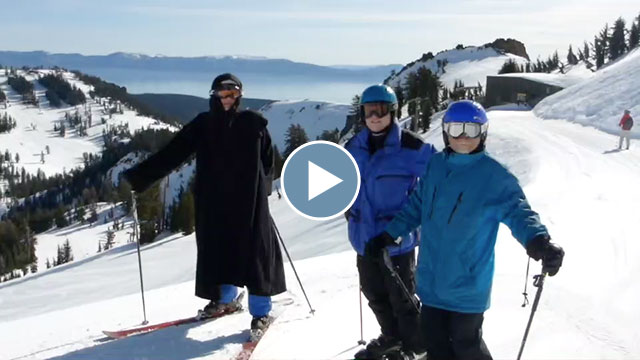
This is some fantastic (and spooky) video footage of several mountain lions hanging around Rancho San Antonio park (near Cupertino and Los Altos). In particular, watch for the part where the lions sit and watch the runner/hiker with the flashlight in the distance:
Here’s also a related news report and video where a runner came upon and recorded a lion capturing a deer at mid-day in Rancho San Antonio park.
It’s rare that I go out to movie theaters, preferring to have friends over to enjoy my home theater, but sometimes I do for special movie events, like the release of the first new Star Wars movie in a long time: The Force Awakens. Well, we happened to go to a theater with an impressive sound system and I was startled by a number of instances in the movie where you could seriously feel the sound pressure of something big happening on screen or the impact of an explosion, not just *hear* it. In other words, some serious pressure waves in that theater. That experience left me wanting to find out how to get that at home!
I’ve long been pretty content with my Acoustic Research S12HO subwoofer (a 12″ inch down-firing driver), particularly in my old condo’s home theater. It filled out the bass response well, without being overbearing and without bothering the neighbors. I’ve had it since 1999. However, in my home now in the hills above Santa Cruz, I have a much larger room with a huge vaulted ceiling and my old subwoofer can’t really fill the room. (Plus I don’t have close neighbors to worry about bothering.)
So I did my usual many days of research and ended up settling on getting two (yes, two!) highly-rated V1800 subwoofers from Power Sound Audio. The V1800 subwoofer features a 725 watt amplifier and a huge, vented 18″ driver capable of getting down below 16 Hz. It’s capable of delivering up over 120 dB of sound. (Here’s a list of comparative decibel levels.) I bought two of them because a single subwoofer can potentially fill a room in such a way that you get large peaks of output in some locations in the room and large dips, even dead spots, in other locations. Adding a second subwoofer in a different location allows it to interact with the room in such a way that its peaks and valleys will tend to cancel out the other subwoofer so you get a more even response throughout the room. It also has the side effect of increasing the output overall by quite a bit (about 6 db).
Here’s a great set of tips on how to go about optimizing both subwoofer placement and crossover settings. For me, the only really practical location was up front on either side of my equipment cabinet:
Even with the large vaulted space of my home theater, I found that the appropriate gain setting needed for both subwoofers was only about 20%. It was amusing to turn them both up to 50% gain though just to see what would happen. The room shakes so hard at that level that I’m afraid of turning it up any further for fear of breaking something like a window.
Anyway, set an appropriately balanced level, their impact (literally and figuratively) is still quite dramatic. These guys fill out the bass end of music wonderfully, nice and tight, without being overbearing at all. And for low frequency effects (LFE) in movies, the experience is fantastic. The rumble from a passing train in a movie makes you believe there really is a train passing by. A rocket launch shakes the whole room (and much of the house) – you feel it in the floor, the walls, the chairs. And most amazing of all, you feel sharp explosive impacts on your chest. No need to strap subwoofers to your chairs! “Tron Legacy” makes for a great bass demonstration throughout. I particularly love how you literally feel a jolt to your chest when Sam is struck by the laser digitizer and transported into the digital world.
Last month Darlene and I finally made it over to the Glaum Egg Ranch in nearby Aptos during open hours to pick up some eggs and see their dancing chicken show:
I joined Glenn and Michele last week on another segment of their extended, six-month travels (Glenn and Michele’s Most Excellent Adventure™) – this time flying up to Churchill, Canada, to stay at a small remote lodge along the Hudson Bay and go out on guided walks to see and hug polar bears! Well, not so much hugging really. (But they do look so huggable!)
A video montage of our polar bear encounters and other activities near Churchill.
We stayed three nights at Dymond Lake Lodge, one of three small “eco-lodges” operated by Churchill Wild, looking for polar bears and other wildlife during the day and enjoying the wonderful meals and the stars and the aurora borealis at night. We lucked out with weather. At this time of year we should have encountered daytime highs no greater than the teens or single digits (in Fahrenheit) even before any wind chill (as in seriously cold, the primary reason Darlene didn’t join us), but we lucked out with temps way up in the mid-20’s! Yes, below freezing, but really relatively balmy! Just ask the polar bears!
Speaking of which, we were able to see lots of bears and even watch an unusual encounter between two different mama bears and their cubs. The guides are very good at approaching and reading the bears’ behavior and working to keep the experience safe for everyone, including the bears.
After several amazing days of walking out amongst the bears, we returned to Churchill for an afternoon of dog-sledding with Bluesky Expeditions and then a full day on an arctic tundra safari with Frontiers North Adventures in one of their massive custom-built “tundra buggies”.
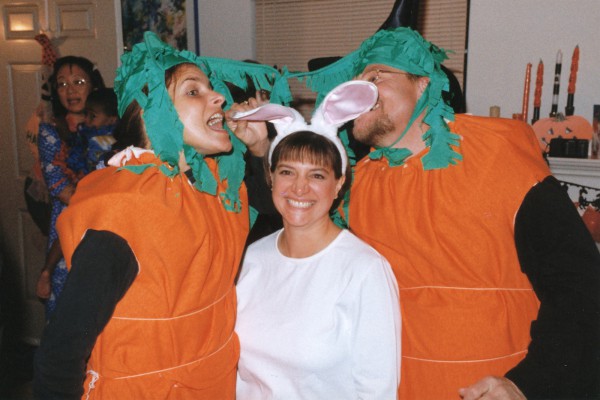
Mike & Nanci hosted a Halloween party at their place in San Jose this year. Mike showed he was practicing to be a member of the Blue Man Group and Nanci tried to make rain as El Nino but it was more of a dribble. I showed up as an Arabian desert prince with my lovely genie-of-the-lamp, Darlene.
As an add-on for our trip to Chile’s Atacama Desert, we all wanted to be sure to get to see the amazing Uyuni Salt Flats in nearby Bolivia. As it worked out, we were able to join up with BikeHike’s trial run of their new Bolivia adventure trip by taking a guided, three-day, 4×4 road trip from Chile over the Altiplano to the Uyuni Salt Flats in Bolivia. Darlene was also able to finagle a little additional time off from work to join us on this portion of Glenn and Michele’s Most Excellent Adventure™.
A video montage of our time in Bolivia. (6:45 min, 131 MB)
Across the Altiplano: Glenn, Michele and I started out in San Pedro de Atacama, Chile, and were driven up to the Altiplano and dropped off at the tiny, remote little border control building on the southwest Chilean/Bolivian border. After successfully negotiating Michele and Glenn’s Bolivian visas (mostly about producing absolutely pristine US dollars for the visa fee), we were loaded into the apparently defacto standard Altiplano vehicle: a Toyota 4×4 Land Cruiser. Over the next couple of days, we navigated a maze of dirt roads in the high altitude (15,000 ft) visiting a series of color-coded lagoons (red, green, white, etc) and a few miscellaneous sights and landmarks. We overnighted in both a hotel made of stone and one made of salt and got to try our hand at herding llamas to pasture as well as trying to fire a slingshot without injuring ourselves. We also spent the better part of two days criss-crossing the Uyuni Salt Flats and they proved to be as vast and amazing to behold as suggested in the photographs we’d seen before.
Crossing the Uyuni Salt Flats
More of the Uyuni Salt Flats: After this initial introduction to Bolivia, we were deposited in the town of Uyuni in time to join Darlene and the rest of the BikeHike group flying in from La Paz. Over the next couple of days, we would explore much of the area on bikes, starting with a tour of the mining ghost town of Pulcayo. We biked back down to Uyuni, mostly following the route of the old mining railroad bed. We biked across a few chunks of the salt flats itself – which proved quite daunting due to the vast, unchanging scenery. We stayed overnight in a more rudimentary building made of salt on the slopes of the volcano Tunupa and enjoyed a ride out for sunset and stargazing on the salt flats. On our second day, we visited a cave containing desiccated mummies and continued on to the island of Incahuasi, in the middle of the flats and home to hundreds of cacti.
Biking Bolivia’s “Most Dangerous Road”
“Death Road” Ride: Upon our return to La Paz, we had an early start to go ride mountain bikes down along Bolivia’s infamous “world’s most dangerous road”. They’ve since built a new, modern, paved highway to bypass the route but it was once very treacherous for being a dirt road cut into very steep mountainsides and forcing buses and other large vehicles to try to squeak by each other. This route now makes for a gorgeous and easy downhill bike ride packed full of wonderful mountain vistas. Unfortunately, we had to do the ride with one of several large tour groups and so you have to do things on their terms. You’re forced to keep to a schedule that at times is pushing you forward (despite the desire to stop and enjoy the stupendous views) or making you wait (for organized photo portrait stops, despite the fact that everyone has cameras of their own, or while the staff clean and prep the bikes at the end of the ride, etc). Amusingly, you’re also required to wear full downhill racing body armor and full face helmets despite a route that consists of first a paved highway and then a well-used dirt road and a gentle downhill slope. Actually, the full face helmet was dangerous for how much it limited your ability to see around you. I suspect the armor is both to drum up the “Death Road” adventure marketing as well as for insurance purposes – not that body armor would do you much good if you managed to ride off a several hundred-meter precipice! Anyway, I think this excursion would be a lot more fun with your own group, going at your own pace and with normal biking gear.
Enjoying a scenic overlook in Bolivia’s Amazon jungle
Amazon Jungle and Grassland: After La Paz, we were on to the Amazon jungle, starting with a river boat cruise to our jungle lodge in Madidi National Park. Along the way, we stopped off at a farm where among other things they grow sugar cane. We were able to put a little labor into squeezing out a bucket of sugar cane juice for everyone to sample, with a touch of lime. From our jungle lodge, we set out to hike to our overnight campsite, near a macaw nesting area. Besides lots of spiders and ants, our guides were able to scare up a pack of wild boar. I was a little anxious about overnighting in the Amazon as I’m very not keen on large creepy-crawlies and have already had my share in other tropical rainforests. As it turns out, at least this part of the Amazon was no more intense in terms of bugs and it was fine. I do wish we could have spent a more leisurely time moving through the jungle though and seeing and learning about the rainforest (as I have enjoyed on other such hikes), instead of in the apparent rush we often seemed to be in. I wasn’t even really able to pause to take any decent pictures along the trail. We did enjoy a leisurely return trip to the lodge, floating down the river in the afternoon rain on a log raft constructed on the beach. That night we went for a short jungle walk to see what we could find after dark.
Temo demonstrates his boundless affection for Michele. (30 second video)
The following day saw us return to town by river boat and then take an extended drive to get to a second lodge in the swampy grasslands of Pampas del Yacuma. First we were greeted by not-so-friendly caiman and turtles but then by a super-friendly and ever-curious coati at the lodge. We ventured out again on a pair of boats to follow the river and see the many birds, caiman and capybara along the river… before the skies opened up for serious afternoon downpour. (At least our boat didn’t pussyfoot it back to the lodge to get any silly rain gear.) That night Glenn and I went out again with our guides Ishmael and Jorgen to see all the creepy eyes of the caiman reflecting back at us in the dark. Plus we managed to catch several Amazon trout by expertly letting them leap into our boat. On our fourth and last Amazon day, we went hiking in a plantation to hoot at howler monkeys in the trees and to catch meat-hungry piranha by the river side. The tricky part seemed to be removing the hook from the menacing jaws of those little fish.
An alpine view near Mount Condoriri
Our Last Day: After returning to the cool, high altitude of La Paz from the Amazon basin, we enjoyed a home-cooked meal at the home of a local resident while Glenn kept careful watch over a clearly demonically-possessed children’s doll. On our last day, Michele suggested a hiking destination for us all in the Andes: the glacier-laced Mount Condoriri. The drive out there proved adventurous in itself, including trying to find a suitable box lunch among the raw meats and stacks of junk food in the street-side market. We ended up hiking to an alpine lake at the base of the mountain and it proved to be a nice finish to a great little trip.
Recommendations: Our 4×4 excursion from San Pedro de Atacama over to the Uyuni Salt Flats was not particularly exceptional and I have no reason to recommend them (actually it seemed our driver was more knowledgeable and trying harder than our English-speaking guide). For the rest of the trip, the BikeHike tour of Bolivia including the Uyuni Salt Flats and the Amazon jungle, this trip was very enjoyable despite being their trial run to shake out the “bugs” and find improvements to be made. Definitely worth checking out. But I want to call out special attention to Ishmael and the folks at Mashaquipe EcoTours for their splendid staff and lodges in the Bolivian Amazon basin as well as their efforts to benefit local indigenous families. Lastly, thanks again to Trish and Jorgen for helping us (me, Darlene, Glenn and Michele) enjoy another great adventure!
Glenn and Michele are in the middle of a six-month travel adventure (starting in South America) and I was able to fly down and join them in northern Chile at the end of September to get to see some of the Atacama Desert region. We were able to make arrangements through BikeHike for nine days of guided activities and exploration surrounding the little oasis/tourist town of San Pedro de Atacama, including hiking, biking, horseback riding and several days of trekking.
This is the world’s driest desert (in the sense of how little rain ever falls) and it may also be the world’s oldest desert, the region having been hyper-arid for many millions of years. While it may almost never receive any rain, water does reach the basin from surrounding mountain sources though it all eventually evaporates, leaving behind salt and mineral deposits. There’s still plenty of wildlife and the area is known for its varied and gorgeous geological formations, resting up against the immense Andes mountains.
Pink flamingos in the Salar de Atacama
Some of the highlights of the trip:
Horseback riding and later hiking and sand surfing in “Death Valley”, a beautiful area of red rock and sand dunes which apparently picked up a name mistook from the French priest who tried to name it Valley of Mars (“marte” not “muerte”, in French).
Hiking up the Gatchi Gorge to bathe in the hot springs and source of the river Puritama.
Trekking from the town of San Pedro de Atacama (7900 ft) up to the high wetlands of Machaca (13,000 ft) over three days and 42 miles, climbing up from desert terrain through river canyon lands to mountain villages and terraces.
Biking and walking out among the salt flats and lagoons in the Atacama.
Hiking up the little mountain of Zoquete (16,000 ft) above the high altitude El Tatio Geysers
Enjoying the magnificent night sky of stars from such a high and dry landscape. The Atacama area is known as a prime astronomical viewing area for its clear, dry skies and high altitude and there are numerous observatories in the surrounding mountains.
If you’re interested in booking a similar tour, ours was actually put together by BikeHike, whom we’ve done trips with in the past, but they don’t actually offer this region any more. However, even though our itinerary was customized for us to add a variety of activities, very similar itineraries (including the multi-day trekking and the overnight in the indigenous village of Rio Grande) are actually widely available from numerous tour operators over the web: Chimu Adventures, KE Adventure Travel, Cascada Travel, Amazon Adventures and others. Despite this, we didn’t really encounter a lot of other tourists – and none at all during the trekking portion. I believe we were there at the very start of the tourist season though.
Thanks again to Yasu and the rest of the crew for a wonderful little adventure!
A video montage of our exploration of the Atacama Desert region.
Michele has also posted a couple of times about the trip in her blog: